Service
GEO for Indian law firms, inside Rule 36
Indian advocates cannot advertise, in Google or in ChatGPT. What AI assistants say about a firm comes from its own articles, its directory rankings and its profiles across the web. We write and correct those to the Bar Council's rules, from Mumbai, New Delhi and Bengaluru, from US$2,000 a month.
Book a strategy callFor an Indian firm, AI answers are visibility it cannot buy
Rule 36 of the Bar Council of India Rules bars advertising directly or indirectly, and OpenAI's advertising policy says ads for legal services outside the US are prohibited. So when a founder asks ChatGPT, Gemini or Perplexity which firms handle a matter, the firms named are the ones whose pages, directory profiles and published work the assistant could read. The Bar Council's circular of 17 July 2026 encourages firms to publish accurate legal awareness content that cites its sources, and that is the content assistants quote.
-
The circular describes what gets cited
Circular BCI/D/4657/2026 asks legal awareness content to identify the provision or precedent it relies on, say it is general information and carry a disclaimer. An article written that way is safe under the circular and easy for an assistant to quote.
-
Assistants check who wrote it
The circular asks an advocate publishing legal content to disclose their name, State Bar Council and enrolment number. We put those on every byline and link them to the lawyer's profile, so the assistant can tie the article to a real advocate.
-
Wrong facts travel
Assistants answer questions about a named firm from its site, directory profiles, Business Profiles and news. If those disagree about offices or partners, the answer can be wrong. We list every source in month one and correct what does not match.
Where GEO for Indian firms goes wrong
Most of these break Rule 36 or the July 2026 circular, and some also break Google's or Wikipedia's rules.
- Problem
Buying a place in a "top law firms in India" list so AI tools pick it up.
How we fix itA paid listing that presents the firm as among the best is indirect advertising under Rule 36. We put the firm's effort into Chambers, Legal 500 and IFLR1000 submissions, which rank firms from the directories' own research.
- Problem
Articles drafted with AI and published without checking the citations.
How we fix itThe circular prohibits content based on fabricated judgments or AI-generated case law. We check every judgment against the court's record before the firm's lawyers review the draft.
- Problem
An agency editing the firm's Wikipedia article.
How we fix itWikipedia requires paid editors to disclose their client and discourages them from editing affected articles directly. We leave clients' Wikipedia articles alone.
- Problem
A security plugin that blocks every bot except Googlebot.
How we fix itChatGPT search only shows sites that let OAI-SearchBot crawl them, according to OpenAI. We check the server's rules and allow the search crawlers the firm wants to appear in.
- Problem
Selling an llms.txt file as the GEO work.
How we fix itGoogle says no AI text files are needed for AI Overviews, and no provider we checked says it uses llms.txt. We add one in an hour and spend the retainer on articles and sources.
A guide to GEO for law firms in India
This guide covers how ChatGPT, Gemini, Perplexity and Google's AI Overviews find and describe Indian law firms, what Rule 36 and the Bar Council's July 2026 circular allow a firm to publish for them, and the work we do each month. The law firm GEO hub covers the parts that are the same in all four of our markets.
Why AI answers matter more in India than elsewhere
An American firm that wants to be seen can buy Google Ads, Local Services Ads and, since August 2026, ads inside ChatGPT. An Indian advocate can buy none of them. Rule 36 of the Bar Council of India Rules bars advertising "either directly or indirectly", and OpenAI's advertising policy, updated on 20 November 2026, says "Ads for legal services outside of the US are currently prohibited."
That leaves an Indian firm with the visibility it earns: Its own website, the articles it publishes, the directories that rank it from their own research, and what other people write about it. AI assistants build their answers from exactly those sources. When a founder in Bengaluru asks ChatGPT which firms handle data protection compliance, the answer comes from pages the assistant could read, and a firm that has published nothing readable on the subject is not in it.
What the rules let a firm publish
Rule 36 and the Schedule. Rule 36 says an advocate shall not solicit work or advertise, by circulars, advertisements, touts, personal communications, interviews not warranted by personal relations, newspaper comments, or photographs published in connection with their cases. The 2008 proviso lets an advocate put particulars from a Schedule on a website: Name, address, telephone numbers and email, enrolment details, qualifications and areas of practice. In August 2024 the Ministry of Law and Justice told the Lok Sabha that the prohibition stands.
Circular BCI/D/4657/2026 of 17 July 2026. The Bar Council's circular on social media conduct and digital ethics restates Rule 36 and then describes the content that remains open. It encourages "chambers, law firms and legal aid bodies" to publish accurate, non-promotional legal awareness content. It asks that educational content on a provision, judgment, limitation period or remedy say it is general information, identify the provision or precedent it relies on, and carry a disclaimer telling readers to seek independent advice on their own facts. It names claims such as "guaranteed bail", "sure acquittal" and "special court connection" as bait for client acquisition. And it prohibits content built on "fabricated judgments, fake citations, unverified screenshots, misleading excerpts, AI generated or otherwise non-existent case law".
The circular's standard for legal awareness content matches what AI assistants quote. An article that names the section, links the official text, dates the judgment and states the answer plainly is the safest thing an Indian firm can publish under the circular, and the easiest for an assistant to cite.
What we do for an Indian firm, and what we leave out
| GEO work | For an Indian firm | Why |
|---|---|---|
| Legal awareness articles | Written to the circular, with the provision cited, the official text linked, a general-information note and the disclaimer | Circular BCI/D/4657/2026 |
| Author identity | Full name, State Bar Council and enrolment number where the author holds out as an advocate, linked to a profile page | The circular's disclosure passage; assistants also check who wrote a page |
| Firm facts across the web | Name, offices, practice areas and lawyers kept identical on the site, directory profiles, Google Business Profiles and LinkedIn | Assistants compare sources; mismatches lead to wrong answers |
| Directory rankings | Chambers, Legal 500 and IFLR1000 submissions run on the firm's matters | Editorial rankings, researched by the directory, not paid placement |
| Paid placement in AI answers | Not done | Rule 36; OpenAI bars legal services ads outside the US |
| Sponsored "best law firms" lists | Not bought | Indirect advertising under Rule 36 |
| Testimonials and ratings on the site | Left out | Not among the Schedule's particulars |
| Wikipedia articles about the firm | Not written or edited by us | Wikipedia's conflict-of-interest and paid-editing rules |
Where AI assistants look for Indian legal answers
Each assistant searches before it answers. ChatGPT uses its own crawler, OAI-SearchBot, and OpenAI states that "Sites that are opted out of OAI-SearchBot will not be shown in ChatGPT search answers." Perplexity uses PerplexityBot, Anthropic uses Claude-SearchBot for Claude's search, and Google's AI Overviews and AI Mode draw on Google's own index. A firm's site has to let those crawlers in. A security plugin or firewall rule that blocks every bot except Googlebot takes the site out of ChatGPT and Perplexity search, and nobody at the firm will notice unless someone checks the server's rules.
For an Indian legal question the competing sources are well known: The official text on India Code and regulators' sites, court judgments, legal news publishers, other firms' articles and blogs, and directories. A firm's article gets cited when it answers the question more directly than those, or adds what they leave out, such as how the provision works in a particular court or how long a step takes in practice.
The firm's own name is a separate question. When someone asks an assistant about a named firm, the answer pulls from the firm's site, its directory profiles, its Google Business Profile and news mentions. If those disagree about the firm's offices or partners, the answer can be wrong. Part of our first month is listing every place the firm appears and correcting what does not match.
Articles that assistants quote
The Indian firms we work with publish most of their visibility through articles, and the numbers show where it comes from. King Stubb & Kasiva's articles on the Digital Personal Data Protection Act rank at an average position of 1.3 for "dpia under dpdp act" and 1.6 for "data retention under dpdp act", and the firm has had 25 enquiries about data protection, 13 of them from companies. TLH Advocates & Solicitors' library earned 1,081 clicks in one month across 217 articles, more than its home page. Google says AI Overviews need nothing beyond what makes a page eligible for an ordinary snippet, so pages that rank like these are the ones its AI features can draw on.
We write each article for an Indian firm to a fixed pattern:
- The first paragraph answers the question in two or three sentences, with the section or rule named.
- The official text is linked: India Code, the Gazette notification, the regulator's circular or the court's judgment.
- Every judgment is cited by name, court and date, and checked against the court's own record. The circular's line on AI-generated case law is why this step is never skipped, and assistants repeat errors they find.
- The article states that it is general information and ends with the disclaimer the circular describes.
- The byline carries the author's name, State Bar Council and enrolment number where the author holds out as an advocate.
- Nothing about outcomes, timelines the firm promises, or the firm's own pending matters.
The firm's lawyers approve each article before it is published. The circular holds an advocate responsible for what staff and social media handlers publish on their behalf, and an agency is in the same position.
Directories, registers and the firm's footprint
Corporate buyers in India and abroad read Chambers Asia-Pacific, The Legal 500 Asia Pacific and IFLR1000, and assistants answering "which firms are ranked for M&A in India" often draw on the same rankings and on the firms' profiles in them. A firm whose practice descriptions on its website match its directory submissions gives the assistant one consistent account. Our directory submissions for Indian firms service runs the submissions themselves, and we keep the website in step with them.
The rest of the footprint is plainer work. Each real office has a Google Business Profile with the name on its signage. Lawyer profile pages carry the State Bar Council and enrolment details the Schedule allows. Structured data on the site matches the visible text, as Google's structured data policies require, and links each lawyer's profile to the pages that confirm who they are.
llms.txt and the files people sell
Agencies sell Indian firms llms.txt files, AI schema packages and "AI-ready" plugins. Google's guide to AI features says "You don't need to create new machine readable files, AI text files, or markup to appear in these features", and that no special schema.org markup is needed. llms.txt is a proposal published by Jeremy Howard in September 2024, and none of the AI providers' documentation we checked says it is used to choose sources. We add one to sites we build because it costs an hour, and we never sell it as the work. Our post on llms.txt for law firms has the detail, and AI crawlers and robots.txt covers which bots to allow.
Measuring AI visibility for an Indian firm
Google Analytics 4 now has an "AI Assistant" default channel for visitors who arrive from ChatGPT, Gemini, Copilot and similar assistants, which lets a firm see AI referrals beside search. We report three things each month:
- Visits and enquiries from the AI Assistant channel, by landing page.
- A fixed set of questions the firm wants to be found for, asked in ChatGPT, Perplexity, Gemini and Google's AI Overviews, with whether the firm is named and which page is cited.
- Enquiries by page, which is the number that pays for the work.
Visits from AI Overviews themselves are counted by Google as ordinary search clicks in Search Console, so they sit inside organic search, not the AI channel. Our post on measuring AI referrals explains how to set this up on a firm's own analytics and enquiry forms.
A first quarter for an Indian firm
Take a firm with offices in Mumbai and New Delhi, practising corporate, disputes and data protection. In month one we audit whether the AI crawlers can read the site, list every place the firm appears online and what each says, and ask the assistants forty questions a client of the firm would ask, recording who is named. We read the circular against every page and flag anything beyond the Schedule for the partners to decide on.
In month two the first articles go to the firm's lawyers, each written to the six-step pattern above, and the lawyer profiles gain the circular's disclosures. Directory profiles and Business Profiles are corrected where they disagree with the site. In month three more articles go out and the first report compares the forty questions against month one.
The retainer for an Indian firm
GEO and SEO are one retainer for us, starting at US$2,000 a month, with a three-month minimum and 30 days' notice after that. Month one is the audit and the question set; each month after it covers articles approved by the firm, five existing pages improved, technical fixes, Business Profile upkeep, the AI checks and a report led by enquiries. Our agreements say we do not guarantee rankings, citations or leads, and under the circular no firm should be promised them.
Our India SEO page covers search in more depth, and law firm SEO under Rule 36 takes the rule and circular line by line. For other markets see GEO in the USA, the UAE and Canada. Our post on getting a law firm recommended by ChatGPT goes through the work step by step, and choosing a GEO agency lists what to ask any agency, including us.
We work from Mumbai, New Delhi and Bengaluru; our India page lists each office.
Law Firm GEO by market
Frequently asked questions
Can an Indian law firm do GEO under Rule 36?
Yes, within the content the rules leave open. Rule 36 bars advertising and soliciting, and the Bar Council's circular of 17 July 2026 encourages accurate, non-promotional legal awareness content that cites its sources and carries a disclaimer. GEO for an Indian firm is the work of publishing that content well and keeping the firm's facts accurate wherever assistants read them.
Can an Indian firm advertise in ChatGPT?
No. OpenAI's advertising policy, updated on 20 November 2026, permits legal services ads only for licensed professionals in the US and says ads for legal services outside the US are prohibited. Rule 36 would bar them anyway.
Which AI assistants matter for Indian firms?
ChatGPT, Google's AI Overviews and AI Mode, Gemini and Perplexity. Each searches before it answers: ChatGPT through OAI-SearchBot, Perplexity through PerplexityBot and Google through its own index. We check each month whether each one names the firm for the questions it wants to be found for.
Do we need an llms.txt file?
Google says no AI text files are needed for its AI features, and none of the providers we checked says it uses llms.txt. We add one to sites we build because it is cheap, and do not treat it as a ranking factor.
How do you measure GEO for an Indian firm?
Google Analytics 4's AI Assistant channel shows visits from ChatGPT, Gemini, Copilot and similar assistants. We report those visits and the enquiries they produce by landing page, plus a fixed set of client questions asked in each assistant every month.
Can you guarantee the firm will be named by ChatGPT?
No. Our agreements rule out guarantees of rankings, citations or leads, and the assistants decide which sources to use. The circular also warns against promises of outcome, and a promise of AI visibility is no different.
Case studies

TLH Advocates & Solicitors: SEO And GEO That Put Its Insights To Work
Full-service law firm headquartered in Hyderabad.
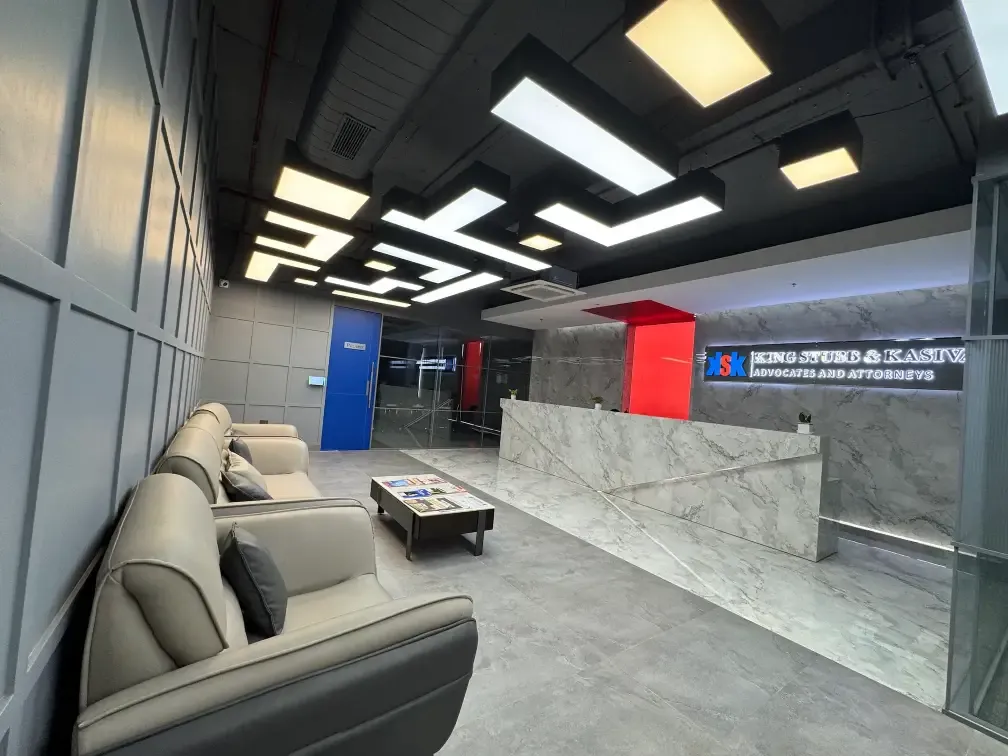
KSK’s Surge: 35K Monthly Clicks With Authority-Driven SEO
National corporate law firm serving Fortune 500 clients in India.

IndiaLaw’s 39000 clicks a month With Zero Paid Ads: A Legal SEO Masterclass
Pan-India full-service litigation and dispute resolution firm.